Explore the biggest AI trends of 2025—from generative AI to edge computing—transforming business, tech, and daily life globally.
2025 isn’t about robots taking over—it’s about humans and AI teaming up. From your smart alarm that learns your sleep patterns to personalized online shopping, AI has seamlessly integrated into our daily lives. The current AI revolution marks one of the most significant technological shifts in history, fundamentally transforming how we work, create, communicate, and solve complex problems.
In This Article
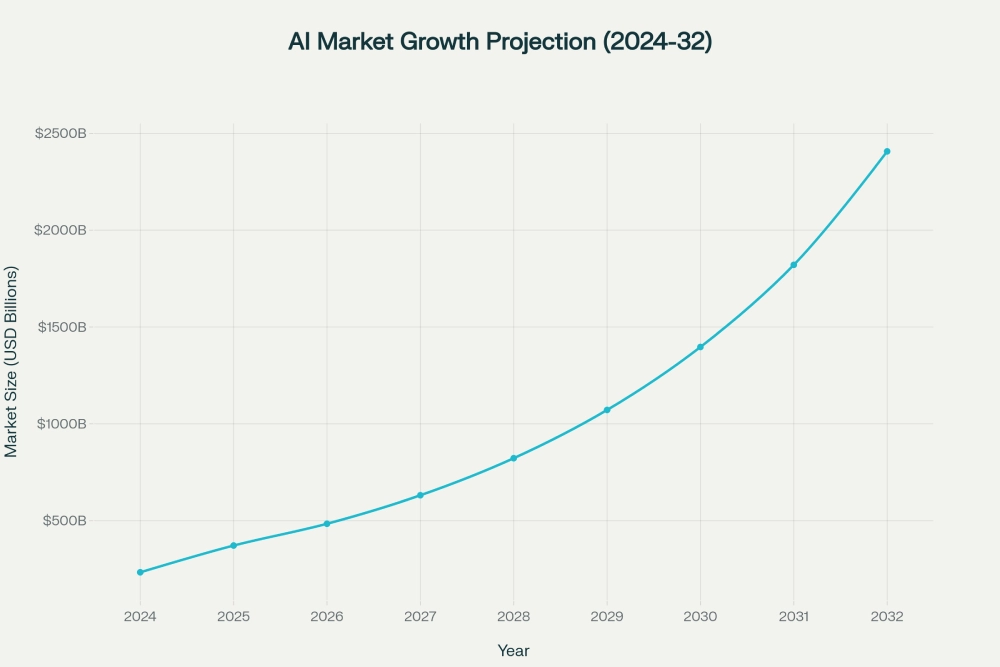
Key takeaway: The AI market is not only growing rapidly in size, but is evolving into foundational infrastructure that enables businesses and improves lives globally.
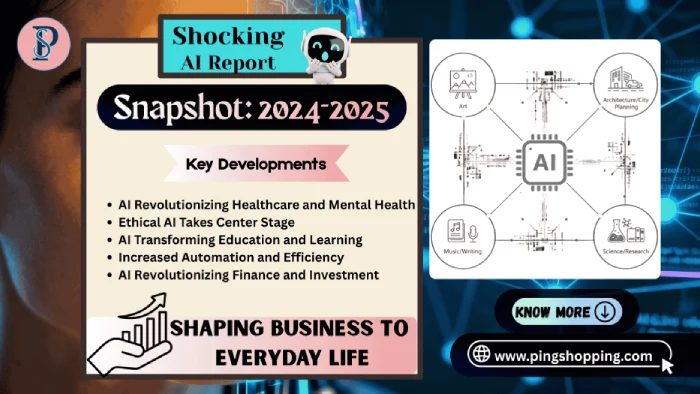
The Current AI Landscape: A 2024-2025 Snapshot
As we navigate through 2025, AI adoption has reached unprecedented levels. Recent data from the Federal Reserve reveals that 54.6% of American adults now use generative AI regularly, marking a 10 percentage point increase from just one year ago. Even more striking, AI adoption for work purposes has climbed to 37.4%, while non-work usage has surged to 48.7%—surpassing early PC adoption rates by a significant margin.
Investment in AI continues to accelerate. According to McKinsey’s 2025 survey, 88% of organizations now use AI in some capacity, and 92% of companies plan to increase their AI budgets over the next three years. The generative AI market alone is projected to reach $59 billion in 2025 and explode to $400 billion by 2031, growing at an annual rate of 37.57%.
This momentum is fueled by several factors: improved computational power, unprecedented data availability, and the democratization of AI through cloud-native platforms like Microsoft Azure OpenAI, AWS Bedrock, and Google Vertex AI. Companies that once viewed AI as a futuristic concept are now racing to implement AI agents, multimodal systems, and intelligent automation across their operations.
Generative AI Transforming Creative Industries
One of the most visible AI trends in 2025 is the explosive growth of generative AI in creative fields. From content creation to product design, AI-powered tools are revolutionizing how we produce and consume creative work. Platforms like ChatGPT, Jasper, and Copy.ai enable teams to generate outlines, drafts, and entire marketing campaigns in minutes rather than hours.
The creative industry has embraced AI not as a replacement for human creativity, but as a powerful collaborator. AI now produces high-quality text, images, music, and even video content at unprecedented speed and scale. Tools like Adobe Firefly integrate generative AI directly into design software, while platforms like Synthesia and Lumen5 convert text into AI-powered videos, supporting global multi-channel distribution.
According to recent industry data, businesses using AI content tools can increase their content output by up to 50% while maintaining quality standards. Production time has been reduced by as much as 70%, allowing creative professionals to focus on strategy, storytelling, and higher-level creative decisions rather than repetitive tasks.
Also Read
AI-Powered Personalization Reaches New Heights
Personalization powered by AI has become the new standard for customer experience in 2025. Companies leveraging AI personalization report conversion rate increases of up to 25% and customer satisfaction improvements of 15%. The technology has evolved far beyond simple product recommendations—it now creates hyper-personalized customer journeys that adapt in real-time based on behavior, context, and preferences.
Major brands are leading the way. Netflix uses AI-powered personalization to recommend content to its users, resulting in significantly higher engagement and retention rates. Starbucks analyzes customer purchase data and behavior to deliver personalized promotions, while Adobe Experience Platform uses AI to create personalized journeys across email, social media, and website interactions.
The impact extends beyond marketing. In e-commerce, AI surfaces recommendations based on browsing and purchase history, making shopping faster and more intuitive. Streaming services employ AI-driven recommendation engines that keep audiences engaged by predicting what they’ll want next. Even smart homes learn your routines and automatically adjust settings to optimize comfort and energy efficiency.
AI Revolutionizing Healthcare and Mental Health
Artificial intelligence is making unprecedented advances in healthcare, with 2025 marking a pivotal year for AI-driven medical applications. AI algorithms now detect diseases like cancer and heart conditions at earlier stages than traditional methods, while AI-powered tools help doctors read X-rays, MRIs, and CT scans faster and with greater accuracy.
Mental health care has particularly benefited from AI innovation. AI-powered chatbots and virtual therapists provide 24/7 support, offering on-demand guidance and coping strategies whenever users need them. These tools analyze patterns in speech, text, and behavior to detect early signs of mental health issues, enabling clinicians to intervene before conditions escalate.
AI enables personalized treatment plans by analyzing patients’ genetic data, lifestyle factors, and medical history. Smart wearables continuously monitor vital signs and provide real-time health data to medical professionals, improving patient outcomes and reducing healthcare costs. Telemedicine platforms powered by AI make quality healthcare more accessible, particularly in remote and underserved communities.
The integration of AI has shown measurable results: AI has the potential to reduce medical errors by up to 86%, decrease hospital admissions by 79.2%, and increase clinicians’ direct patient time from 50% to 67%.
Ethical AI and Regulatory Frameworks Take Center Stage
As AI capabilities expand, ethical considerations and regulatory frameworks have moved to the forefront of technology 2025 discussions. The European Union leads with its comprehensive AI Act, which classifies AI systems by risk level and imposes strict requirements for high-risk applications. The first prohibitions targeting systems with unacceptable risk took effect in February 2025, with additional regulations for General Purpose AI models following in August 2025
In the United States, a sector-based regulatory approach is emerging, with industries like healthcare, finance, and insurance creating specialized rules. Individual states are implementing their own AI governance measures, including transparency requirements and bias audits for automated decision-making tools.
India unveiled its comprehensive AI Governance Guidelines in late 2025, providing a framework for safe, inclusive, and responsible AI. The guidelines address critical dimensions, including data management, algorithmic transparency, risk classification, and the responsible use of generative AI.
These regulatory efforts focus on three priorities: ensuring fairness and transparency in AI deployment, establishing compliance frameworks to guide safe adoption, and building public trust that AI will be used responsibly.
AI Transforming Education and Learning
AI-powered learning platforms are revolutionizing education in 2025, making personalized learning accessible at scale. Modern AI learning platforms like Sana Labs, Docebo, and CYPHER Learning deliver personalized learning paths, adaptive content, and intelligent feedback tailored to each student.
These platforms leverage AI to automate administrative tasks, generate customized course content in minutes, and provide real-time analytics to measure learning effectiveness. AI-powered tools can analyze learner performance data to identify knowledge gaps, create personalized learning paths, and automatically adjust difficulty levels.
The benefits are substantial. Organizations using AI-powered learning platforms report time savings of up to 78% in assessment creation and 42% better retention rates through mobile microlearning approaches. AI enables continuous learning and professional development by creating evolving learning journeys that adapt as users grow.
Virtual AI tutors provide instant feedback and explanations, helping students understand difficult topics in real-time. Language translation capabilities remove barriers, enabling global access to quality education. The technology is particularly valuable in corporate training, where AI automates content creation, identifies skill gaps, and delivers personalized upskilling programs.
Autonomous Systems and Robotics Advance Rapidly
The autonomous systems and robotics sector is experiencing remarkable progress in 2025. Humanoid robots like Tesla’s Optimus Gen 2 and Unitree Robotics’ G1 are now designed to handle both industrial and domestic tasks, integrating cutting-edge AI with advanced engineering.
Self-driving technology continues to mature, with AI systems using large language models to provide real-time explanations of driving decisions. Navigation apps like Google Maps and Waze employ AI to predict traffic patterns, suggest optimal routes, and adjust for delays in real-time. Public transportation systems leverage AI to optimize schedules, predict vehicle maintenance needs, and manage urban transit flow.
In manufacturing and logistics, autonomous mobile robots are revolutionizing warehouse operations and fulfillment processes. These systems combine AI-driven autonomy with real-time adaptation capabilities, enabling robust performance in dynamic environments.
The technology extends beyond traditional robotics. Drones and aerial systems employ AI for applications ranging from agriculture monitoring to defense operations. Swarm robotics and multi-agent systems demonstrate AI’s ability to coordinate complex collaborative tasks.
AI-Driven Cybersecurity Becomes Essential
As cyber threats grow more sophisticated, AI-driven threat detection and response have become essential for organizational security in 2025. AI-powered cybersecurity tools can collect, integrate, and analyze data from thousands of control points—including system logs, network flows, endpoint data, and user behaviors—to identify threats more accurately at scale.
According to Gartner’s predictions, 70% of organizations will have integrated AI-driven threat intelligence systems by 2025. These systems use machine learning algorithms to recognize patterns and anomalous behavior, identifying threats that traditional signature-based methods would miss.
AI enables automated responses to cyber incidents, reducing reaction time and minimizing potential damage. When threats are detected, AI systems can automatically quarantine suspicious emails, alert security teams, and implement protective measures. Companies like Darktrace employ AI-powered systems that learn “normal” network behavior and identify deviations that signal potential threats, even zero-day attacks.
Insider threat detection has also improved dramatically. AI tools now spot unusual user behavior patterns—such as employees downloading large amounts of sensitive files outside normal work hours—enabling early intervention before incidents escalate.
The adoption of AI-driven threat detection tools among Fortune 500 companies has increased by 35%, with organizations achieving faster mean time to detect and respond to incidents.
AI Revolutionizing Finance and Investment Strategies
Artificial intelligence is fundamentally transforming investment strategies and financial services in 2025. AI-powered platforms analyze vast amounts of structured and unstructured data—including financial reports, news articles, social media sentiment, and economic indicators—to generate intelligent investment recommendations.
According to a 2025 PwC study, nearly 60% of institutional investors globally now use AI analytics to forecast stock performance. High-frequency trading systems react to market fluctuations in milliseconds, while robo-advisors use similar technology to guide retail investors toward personalized strategies.
Important Links:
If you are looking for the World’s Greatest Wealth Books Help You Earn 1 Cent Per Second
AI investment in fintech is forecasted to hit $18.3 billion in 2025, with AI-powered platforms managing over $1.26 trillion in assets globally. Machine learning models optimize portfolio risk management, automatically rebalancing assets based on market movements. This enables investors to protect capital and reduce losses during periods of volatility.
Beyond trading, AI enhances fraud detection by monitoring transactions in real-time to identify unusual patterns and flag potential fraudulent activities. Financial advisory services have been revolutionized by robo-advisors—automated systems that create customized investment plans by evaluating factors like age, goals, and risk tolerance.
Edge AI and On-Device Processing Gain Momentum
Edge AI represents a paradigm shift in how artificial intelligence is deployed and utilized. Rather than relying on centralized cloud servers, Edge AI processes data directly on devices like smartphones, wearables, and IoT endpoints.
This architecture delivers critical advantages: real-time responsiveness with minimal latency, enhanced privacy by keeping sensitive data on-device, reduced bandwidth dependency, and improved battery efficiency. Modern smartphones and tablets now feature neural processing units (NPUs) and AI-accelerated chips designed to handle complex computations locally.
According to IDC projections, more than half of PCs shipping in 2025 and over two-thirds of smartphones feature NPUs to enable on-device AI. The next generation of consumer devices utilizes hybrid AI agents that operate both on-device and in the cloud, striking a balance between privacy, performance, and personalization.
Practical applications are already transforming daily life. Voice assistants like Siri and Google Assistant increasingly rely on edge processing to respond instantly without cloud connections. Live photo editing, offline language translation, and predictive text on keyboards are all powered by Edge AI running on your device.
Michael Dell, founder and CEO of Dell Technologies, predicts that “AI will follow the data, not the other way around,” emphasizing that the future of AI will be decentralized, low-latency, and hyper-efficient. He notes that 85% of enterprises plan to move generative AI workloads on-premises within the next 24 months.
AI Driving Climate Tech and Sustainability Innovation
AI technology has emerged as a powerful tool in the fight against climate change, with 2025 marking significant progress in AI-powered climate solutions. According to PwC research, AI systems could decrease global CO2 emissions by over 4% by 2030.
Companies like IBM and Google are developing sophisticated systems to monitor emissions and resource use with unprecedented detail. In agriculture, platforms like ClimateAI help farmers optimize crop production with less water and fertilizer. AI applications such as AutoGrid and Grid.io optimize energy grids, balancing supply and demand while enhancing renewable energy storage.
AI is accelerating decarbonization efforts across multiple sectors. Startups like Protium Green Solutions use AI to optimize hydrogen production, while OCELL applies AI to improve battery technology and energy efficiency. AI-powered carbon management tools from companies like Insight Terra advance carbon removal and greenhouse gas tracking technologies.
The U.S.-Japan collaboration funded by the National Science Foundation is developing AI models for flood resilience, creating frameworks that integrate natural conditions, human perceptions, and policies to design more resilient infrastructure. Virtual reality and AI are being used to treat environmental trauma and build climate awareness.
By 2025, AI technologies will enable better preparation for extreme weather events through predictive analytics, helping communities and governments respond more effectively to climate challenges.
Real-World Examples: Companies Leading the AI Revolution
OpenAI continues to dominate the AI landscape with its groundbreaking GPT models and ChatGPT platform, which reached 1 million users in just five days. The company’s collaboration with Microsoft has been pivotal in shaping modern AI capabilities, and it remains at the forefront of responsible AI development through initiatives like the Frontier Model Forum.
Anthropic, founded by former OpenAI executives, has gained significant recognition for its focus on AI safety and ethical development. Its flagship product, Claude, is a conversational AI model designed to prioritize safety and transparency, setting it apart in a competitive market.
xAI, Elon Musk’s AI venture launched in 2023, debuted its Grok-3 model in early 2025, showcasing advanced reasoning and multimodal capabilities powered by its massive Colossus supercomputer. The company leverages real-time social data from X (formerly Twitter) to enhance its models.
Mistral AI, a fast-growing French startup, specializes in high-performance open-weight large language models. With offices across Paris, London, the U.S., and Singapore, Mistral is positioning itself as a leading open-source alternative focused on privacy and European digital sovereignty.
Wayve is developing autonomous driving systems that use large language models to provide real-time explanations of driving decisions. Glance introduced an AI-native shopping experience that enables users to upload images and receive personalized fashion recommendations, supporting over 400 global brands.
Expert Opinions and Forecasts
Industry leaders are bullish on AI’s transformative potential. Sam Altman, CEO of OpenAI, predicts that “2025 has seen the arrival of agents that can do real cognitive work; writing computer code will never be the same. 2026 will likely see the arrival of systems that can figure out novel insights”. He believes humanity is close to building digital superintelligence and that “AI will contribute to the world in many ways, but the gains to quality of life from AI driving faster scientific progress and increased productivity will be enormous”.
Sundar Pichai, CEO of Google, emphasizes that “the future of AI is not about replacing humans, it’s about augmenting human capabilities”. This sentiment is echoed throughout the industry, with Microsoft’s Chris Young stating that “AI is already making the impossible feel possible, and over the past year we’ve seen significant numbers of people and organizations moving from AI experimentation to more meaningful adoption”.
PwC’s 2025 AI Business Predictions note that “AI adoption is progressing at a rapid clip, across PwC and in clients in every sector. 2025 will bring significant advancements in quality, accuracy, capability, and automation that will continue to compound on each other, accelerating toward a period of exponential growth”.
McKinsey research reveals that 75% of business executives believe AI agents will have a larger impact on the workplace than the internet, and 50% expect their business models to be “unrecognizable” within just two years.
How AI is Changing Daily Life
Shopping and Retail: AI has transformed the e-commerce landscape, creating personalized shopping experiences from the first click to doorstep delivery. Recommendation engines suggest products based on browsing history and preferences, while AI-powered checkout systems enable faster, contactless payments. Retailers use AI-driven inventory management to optimize stock levels and AI-powered dynamic pricing to adjust instantly to market conditions.
Healthcare Access: Wearable devices track vital signs and alert users to abnormalities, while telemedicine platforms provide remote consultations and AI-assisted diagnoses. Virtual health assistants help patients book appointments, access test results, and receive medication reminders. AI is making quality healthcare more accessible and affordable, particularly for populations in remote areas.
Travel and Transportation: Navigation apps predict traffic and suggest optimal routes in real-time. Self-driving cars are becoming more reliable, using AI to navigate traffic and avoid collisions. Airlines and hotels use AI to personalize travel recommendations and optimize booking processes.
Personal Productivity: Smart assistants like Alexa and Google Assistant control home devices through voice commands. AI applications like Grammarly, Notion AI, and Microsoft Copilot assist with writing, editing, and summarizing tasks. AI chatbots provide 24/7 customer support, resolving queries in seconds. These tools are fundamentally changing how we work, enabling us to accomplish more while reducing mundane, repetitive tasks.
AI in 2025 Is Not the Future—It’s Our New Normal
The artificial intelligence revolution of 2025 represents a fundamental shift in how humanity interacts with technology. We’ve moved beyond the experimental phase into an era where AI is embedded in the fabric of our daily lives—from the personalized content we consume to the healthcare we receive, from the way we learn to how businesses operate.
The data is clear: global AI adoption continues to accelerate, investment is surging, and transformative applications are emerging across every industry. Yet the most important trend isn’t just about the technology itself—it’s about how humans and AI are learning to work together, each enhancing the capabilities of the other.
As we look ahead, the opportunities are immense. AI will continue to drive scientific breakthroughs, create new industries, solve complex environmental challenges, and improve the quality of life for billions of people. The workforce will evolve, with AI handling routine tasks while humans focus on creativity, strategy, and complex problem-solving that requires emotional intelligence and critical thinking.
The key to thriving in this AI-powered world isn’t resisting change—it’s embracing it thoughtfully and ethically. Organizations must focus on responsible AI implementation, regulatory compliance, and workforce development. Individuals need to develop AI literacy and adapt their skills to work effectively alongside intelligent systems.
AI in 2025 isn’t the future we once imagined—it’s our present reality, reshaping business and daily life in ways both profound and practical. The question is no longer whether AI will transform our world, but how we will guide that transformation to benefit all of humanity.
“If you found this article helpful, share it with your circle and follow PingShopping on social media”
FAQs
What things is AI changing rapidly?
AI is transforming business, tech, and daily life globally. This current AI revolution is fundamentally transforming how we work, create, communicate, and solve complex problems.
What does the latest data from 2024-2025 reveal?
Recent data from the Federal Reserve reveals that 54.6% of American adults now use generative AI regularly, marking a 10 percentage point increase from just one year ago.
Are there any platforms that outline, draft, and execute a complete marketing campaign in minutes instead of hours?
Of course in this AI era, platforms like ChatGPT, Jasper, and Copy.ai enable teams to outline, draft, and create complete marketing campaigns in minutes instead of hours.
Will I be able to focus on my business and studies using AI tools this year?
Yes, this year you can focus on your business and studies using AI tools. PingShopping has posted the 10 AI tools every small business needs in 2025 and The best AI tools for students.