Meta’s $2B Manus AI acquisition signals a major shift in autonomous agents. Learn how AI agents execute complex tasks independently, boost productivity 66%+, and reshape the future of work.
In This Article
What Is Manus AI and Why Is Everyone Talking About It?
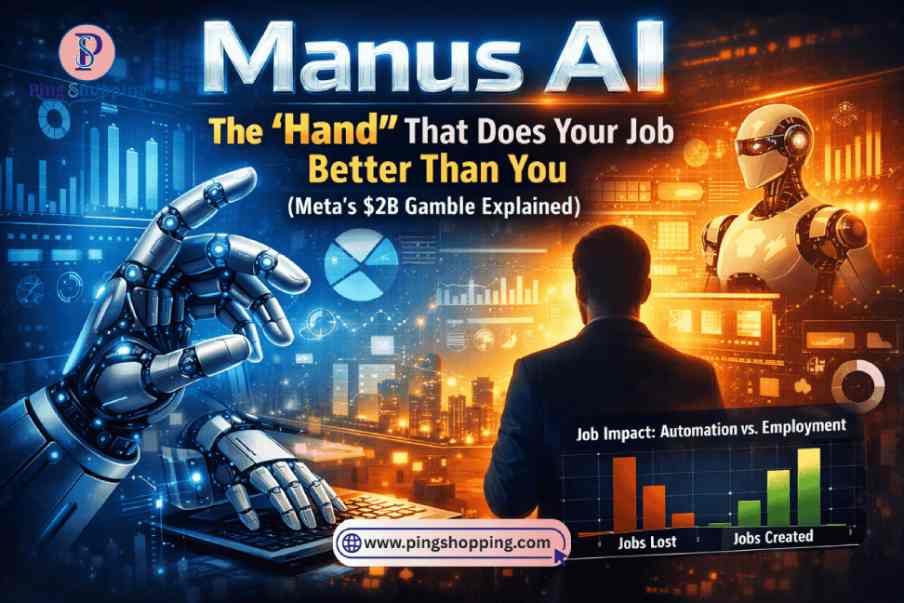
Imagine if you could clone yourself—not to attend more meetings, but to handle the actual work. This is precisely what Manus AI promises to do. In December 2025, Meta announced its acquisition of Manus, an AI agent platform valued at more than $2 billion, shocking the tech industry and validating a fundamental shift in artificial intelligence. Unlike chatbots that answer questions, Manus AI is an autonomous digital agent that plans, reasons, and executes complex tasks without constant human supervision. It opens websites, clicks buttons, writes code, analyzes data, and completes multi-step workflows—all independently.

The metaphor is in the name: Manus, Latin for “hand,” represents an extension of human capability. This isn’t a tool you talk to; it’s a tool that works for you. Since its public launch in May 2025, Manus has already processed over 147 trillion tokens and powered the creation of 80 million virtual computers, demonstrating unprecedented real-world utility. With over $100 million in annual recurring revenue just eight months after launch and a user base in the millions, Manus proved something Silicon Valley had been searching for: autonomous AI agents can generate substantial revenue and solve genuine business problems at scale.
Why Meta Is Betting $2 Billion on AI Agents
Meta’s acquisition of Manus is not a defensive move—it’s a strategic chess piece in Mark Zuckerberg’s larger vision to dominate the autonomous AI market. To understand the brilliance of this bet, you need to see the bigger picture. In June 2025, Meta had already invested $14.3 billion for a 49% stake in Scale AI, bringing Scale founder Alexandr Wang into Meta’s “Superintelligence Labs.” The strategy becomes crystal clear: Scale AI handles the training data infrastructure; Manus provides the execution layer. Together, they give Meta control over the entire agentic AI supply chain—from data labeling to deployment—something no other company has achieved at this scale.
Meta has already invested over $60 billion in AI infrastructure, yet struggled with a critical problem: how to monetize it beyond advertising. The company had powerful language models (Llama, which has been downloaded over 650 million times) but lacked a product that millions would pay for. Manus solved this instantly. The platform already had 2+ million users on its waitlist, millions of paid subscribers, and revenue exceeding $125 million on an annualized basis—all before Meta acquired it. For Meta, this acquisition represents validation that massive AI spending can translate into direct consumer and enterprise revenue.
The integration challenge is substantial but surmountable. Currently, Manus relies on Anthropic and OpenAI models, paying API fees to competitors. Meta will need to replace these with Llama 4, its next-generation model. However, the process data from Manus—the actual workflows and reasoning patterns of millions of autonomous tasks—could make Llama 4 the world’s best reasoning model. This transforms the deal from an acquisition into a strategic accelerant, allowing Meta to leapfrog years of internal development while simultaneously securing millions of users who’ve already demonstrated willingness to pay for advanced AI.
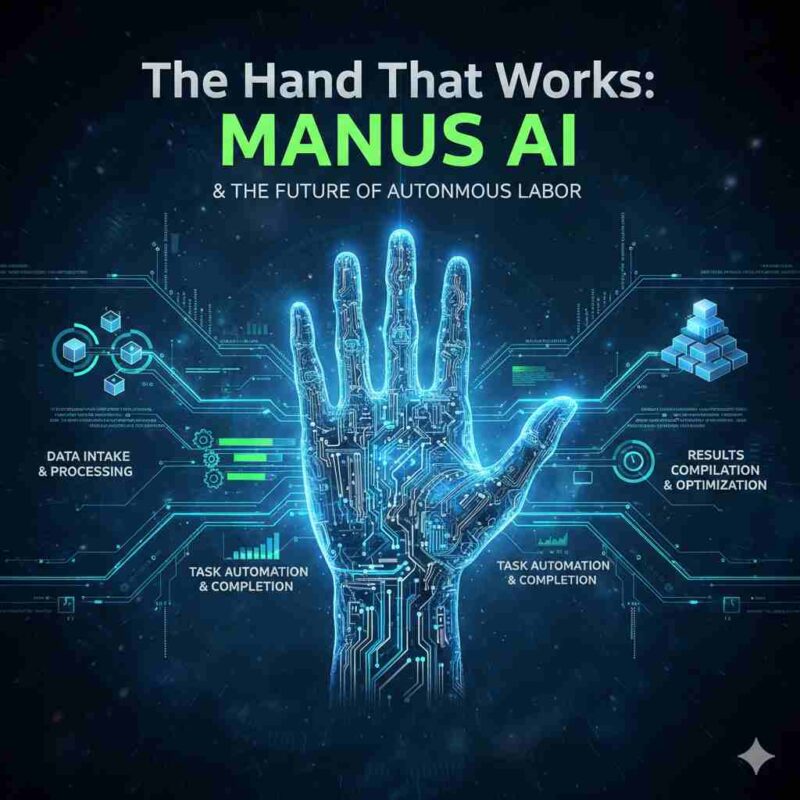
How Manus AI Works: From Commands to Autonomous Action
Understanding Manus AI’s architecture reveals why it’s fundamentally different from previous AI systems. At its core is what engineers call the “agent loop”—a self-correcting process that distinguishes true autonomous agents from traditional chatbots. Here’s how it functions:
1. Planning and Decomposition: You provide Manus with a goal (“Create a competitive analysis of the SaaS market for Q1 2026”). Rather than executing immediately, Manus first analyzes the request, breaks it down into logical subtasks, and develops an execution strategy. It might determine it needs to: identify target companies, gather their financial data, analyze customer reviews, compile trends, and synthesize findings into a report.
2. Tool Selection and Execution: Manus operates within a virtual environment—essentially a cloud-based sandbox where it can browse websites, access databases, run Python scripts, and manipulate files. For each subtask, it selects the appropriate tool or API call, executes the action, and captures the results.
3. Verification and Iteration: Unlike traditional automation that blindly follows instructions, Manus evaluates whether each step produced the expected outcome. If something goes wrong—a website didn’t load correctly, data appears incomplete—it adjusts its approach and tries again. This cycle repeats until the task is complete or explicitly marked as failed with human explanation required.
4. Asynchronous Operation: Critically, this all happens without you waiting. You assign a task in the morning and return hours later to find it completed. Manus works continuously in the background, managing complex research or automating repetitive processes while you focus on strategic thinking.
The underlying architecture employs multiple specialized sub-agents working in concert. A planning agent determines strategy, an execution agent handles implementation, and a verification agent ensures quality. This modular design allows Manus to parallelize work—handling multiple subtasks simultaneously—which accelerates completion time compared to a single monolithic model. The system leverages advanced language models, reinforcement learning, and context-aware decision-making to adapt in real time to unexpected situations.
.
Real-World Use Cases of Manus AI: Business, Marketing, and Productivity
The abstraction of autonomous agents can feel theoretical until you see concrete examples. Across industries, Manus is already delivering measurable impact:
Marketing and Competitive Intelligence: Companies are deploying Manus to conduct market research automatically. Instead of hiring analysts to spend weeks gathering competitor pricing, feature sets, and customer sentiment, a Manus agent completes the analysis overnight and delivers a structured report. Marketing teams report 40% reduction in research time while improving data accuracy.
Customer Service and Support: E-commerce leaders like H&M have deployed AI agents to handle customer inquiries, recommend products based on browsing history, and guide users through checkout processes. The result: 40% reduction in cart abandonment and a 3x boost in conversion rates. Agents handle routine questions (“What’s your return policy?”) instantly, while complex issues escalate to humans.
IT Operations and Cybersecurity: IBM’s Watson AIOps uses agentic principles to detect, investigate, and respond to IT incidents in real time. Organizations report 60% faster incident resolution and an 80% reduction in false-positive alerts that waste technicians’ time.
Healthcare Documentation: Mass General Brigham deployed AI agents to handle clinical documentation during patient visits. Doctors speak naturally while the agent transcribes, extracts relevant data, and updates electronic health records in real time. Physicians report 60% less time spent on administrative documentation—time they reclaim for patient care.
Financial Services: Bank of America’s Erica virtual assistant handles customer financial queries, fraud detection, and transaction execution. The agent has processed over 1 billion interactions with a 98% issue resolution rate, demonstrating that AI agents can scale to millions of simultaneous users.
Government Services: Singapore’s GovTech deployed “Ask Jamie,” a multilingual AI agent across 70+ government websites. Citizens can ask questions in their preferred language, and the agent provides instant answers or directs inquiries to appropriate departments. The result: 50% reduction in call center volume and 80% faster response times for frequently asked questions.
These aren’t pilots or proofs-of-concept. They’re production systems handling millions of interactions daily, with ROI measured in tens of millions of dollars annually.
latest Articles:
- Chatting AI vs Killing AI: How OpenClaw’s Clawdbot and Moltbot Are Changing Online Conversations
- The Ad Blockers Android: Big Tech Doesn’t Want You to Know About in 2026
- Manus AI: The ‘Hand’ That Does Your Job Better Than You (Meta’s $2B Gamble Explained)
- Best Affordable Electric Sports Cars Under $100K
- Most Craziest apps that everyone needs to try in 2026
Frequently asked questions
What is Manus AI, and how is it different from ChatGPT?
Manus AI is an autonomous agent that executes tasks independently, not a conversational chatbot. While ChatGPT answers questions you ask, Manus AI completes entire workflows—research, analysis, coding, document creation—without constant prompting. You set an objective, and Manus breaks it into subtasks, executes them, verifies results, and iterates until completion. It’s the difference between asking for advice and hiring an employee.
Why did Meta spend $2 billion on Manus AI?
Meta acquired Manus to complete its artificial intelligence supply chain. With Scale AI providing training data infrastructure and Manus providing execution capability, Meta now controls the entire pipeline from data labeling to autonomous task deployment.
Will AI agents like Manus eliminate my job?
Research suggests net job creation of 78 million globally by 2030, but job transformation will be significant. Routine, repetitive tasks are most vulnerable (70% automation potential), while creative, strategic, and relationship-driven work remains human-dominated.
What are the biggest ethical risks with autonomous AI agents?
Primary concerns include: amplified bias affecting millions of decisions automatically, lack of explainability making accountability difficult, potential for manipulation if agents optimize for business goals without ethical constraints, and security vulnerabilities where compromised agents could cause massive harm.
“If you found this article helpful, share it with your circle and follow PingShopping on social media”
About the author