Elon Musk on X, AI, Money, and the Future: for the Next brilliant and young minds to become Entrepreneurs
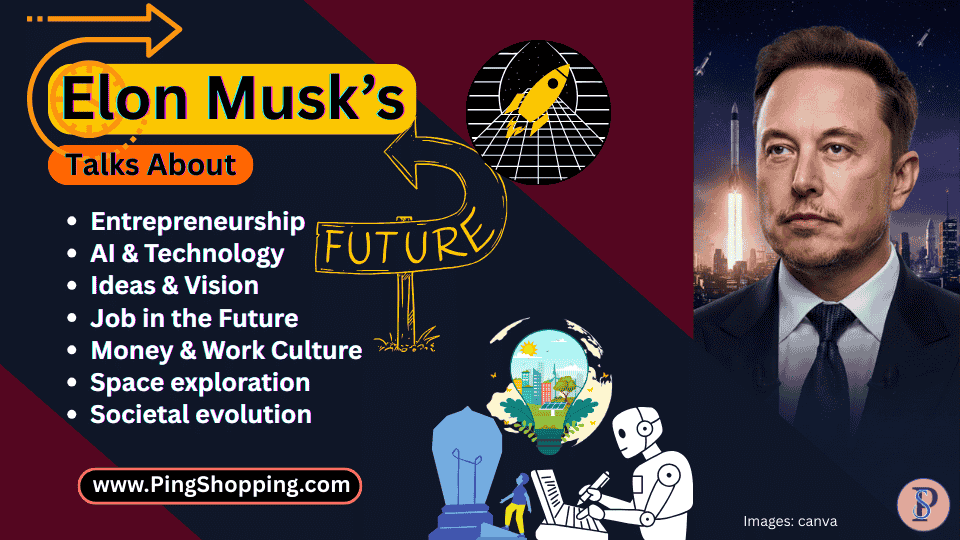
Elon Musk’s words and speech are a valuable resource for ambitious entrepreneurs. In this article, we’re gonna discuss how he explores the future of technology, money, and society, focusing on the core message to the young minds: to build useful products, apply first principles thinking based on fundamental sciences, human psychology, expectation, behaviours, adaptation and evolution, and one must understand that lasting impact requires patience and delayed gratification to become successful in the long term vision.
In This Article
X and the rise of a global mind
Musk describes X as a “global town square” built for readers, writers, and thinkers rather than a pure dopamine machine optimized for empty viral hits. While video is growing fast and will likely dominate internet traffic in terms of bits and compute, he still sees dense text and ideas as the highest‑value form of communication. He talks about developing X into a kind of collective consciousness for humanity by supporting words, pictures, video, secure messaging, and even audio/video calls in one place. Automatic translation, which lets people communicate across languages instantly, is central to this vision because it merges not just English speakers but thoughts from every language into one shared conversation.
On content and politics, Musk’s key takeaway is that X aims for a centrist, law-based approach, avoiding editorial bias. While user demographics change, the principle is that X should not influence political opinions beyond what each country’s laws require.
About the author

S S Dhar
Writer, Editor, Web & Graphics Designer, Teacher,
Product Researcher & Analyst, Digital Entrepreneur.
Visit His Website ssdhar.com
Take a look at his social media to follow & support
Meaning, physics, and why questions matter more than answers
When the discussion turns philosophical, Musk leans heavily on “The Hitchhiker’s Guide to the Galaxy,” where the answer “42” satirizes our obsession with answers without understanding the questions. He believes the real challenge for humanity is learning how to ask better questions about reality, the universe, and consciousness itself.
He uses biology to explain why “collective consciousness” matters: a single cell cannot talk or build a rocket, but trillions of coordinated cells in a human can create language, culture, and spacecraft. No one person can master every domain needed to build a rocket in one lifetime, so only a coordinated human collective can achieve something like space travel.
On spirituality, Musk is careful not to dismiss other people’s experiences but admits his own thinking is “physics‑pulled,” meaning he prioritizes ideas that have predictive value. For him, physics is essentially the study of what consistently predicts reality, and that is the lens through which he prefers to filter meaning and decision‑making.
How Musk evaluates companies and where to invest
For investors and founders in the audience, Musk simplifies stock picking into a couple of brutally practical questions: do you genuinely like the company’s products or services, and do you believe in its future roadmap? If the team is talented, hardworking, still motivated, and keeps shipping great products with a strong pipeline, he considers it a good long‑term investment.
He reminds listeners that a company is ultimately “a group of people assembled to create products and services,” so everything comes back to people and what they’re actually building. Short‑term price swings, even extreme ones, matter far less than whether the underlying team keeps executing on a compelling vision over the years.
For wannabe entrepreneurs in India, he gives simple but powerful advice: focus on making useful products and services and let the market decide whether those deserve to exist. Hype and narratives come and go, but persistent utility and real customer love are what keep a company alive in the long run.
Starlink: internet from orbit and why cities are the wrong fit
Musk then breaks down Starlink in plain language: thousands of satellites orbiting at around 550 km (possibly as low as ~350 km in the future) circle Earth at roughly 25 times the speed of sound, delivering low‑latency, high‑speed internet. Because they are far closer than traditional geostationary satellites at ~36,000 km, the latency is dramatically lower, and the user experience is much snappier.
These satellites are connected to one another with lasers, creating a resilient mesh that can keep routing traffic even when undersea or terrestrial cables are cut, as seen when Red Sea cables were damaged, but Starlink connections stayed solid. This makes Starlink especially powerful in disasters—fires, earthquakes, floods—where ground infrastructure is destroyed, and connectivity becomes a literal lifeline.
But there is a hard physical limit: a satellite beam is broad and must be shared among a fixed number of users, so Starlink will always be structurally better suited to rural and sparsely populated areas than dense cities. Cell towers a kilometer apart, and fiber in cities sit much closer to users, so physics guarantees that urban networks will beat satellites on capacity; at best, Starlink can patch pockets of underserved urban areas or serve a small percentage of city users.
India, urbanization, and a world where work is optional
Asked about India’s future—whether it will urbanize like China—Musk notes some of that has already happened, but suggests a deeper shift is coming from AI and robotics. His prediction is provocative: within 10–20 years, advances in AI and robots will make work “optional,” turning jobs into something closer to a hobby than a survival requirement.
He frames this as a move not towards universal basic income but towards “universal high income,” enabled by productivity so extreme that society can provide abundant goods and services without needing everyone to work full‑time. In this world, working becomes more like growing your own vegetables, despite having a supermarket—something people do because they want to, not because they must.
The conversation then touches human competitiveness: if everyone has “enough,” what do people strive for and compete over? Musk suggests there is a ceiling to how much value AI can create for humans; beyond a certain point, AI and robotics will start doing things for themselves because they will have already exhausted every human‑imaginable way to improve our lives.
The marshmallow test, tattoos, and the power of delayed gratification
The philosophical discussion flows into delayed gratification via the famous “marshmallow test,” which measures whether someone will wait for two marshmallows later instead of one marshmallow now. Musk jokes that he would happily take one marshmallow because he doesn’t actually like marshmallows that much, but he is fully aligned with the principle of delaying gratification to achieve bigger outcomes.
Nikhil Kamath reveals a tattoo on his arm that literally says “delay gratification,” pointing at him as a reminder whenever he trades or invests. Musk calls it good advice—especially for people trying to build hard companies—because serious progress almost always demands years of sacrifice, uncertainty, and compounding effort.
For Indian founders watching, this theme connects directly to Musk’s life: staking his last money on Tesla and SpaceX, enduring near‑bankruptcy, and pushing through repeated technical failures are all extreme examples of choosing long‑term impact over short‑term comfort.
The story behind “X” and money as an information problem
Musk’s obsession with the letter “X” started in 1999, when single‑letter domain names like X.com were available, and he imagined building a “financial exchange” on top of it. His core insight was to treat money as an information problem: banks today are a patchwork of different databases with slow, insecure batch processing; a single, secure, real‑time database would be far more efficient.
That project evolved into what eventually became PayPal, later acquired by a larger company, after which Musk was able to buy back the X.com domain. The purchase of Twitter gave him a chance to revive that original X.com vision—now expanded into a unified platform where people communicate, pay, transact, and perhaps even “live” digitally, something like a WeChat++ for the rest of the world.
He laughs about how far the “X” theme has gone—SpaceX as “FedEx for space,” a child nicknamed X, and the platform itself rebranded as X—but insists some of this is a coincidence. Yet the pattern is clear: for Musk, “X” symbolizes crossings, intersections, and the merging of communication, payments, and identity into one unified system.
Money, energy, and the end of traditional wealth
On the future of money, Musk offers one of the most radical ideas in the entire conversation: in a world where AI and robots can satisfy all human needs, money as the database for labor allocation may largely fade away. When you no longer need to “hire” humans to get things done, the core function of money—coordinating human labor—weakens dramatically.
He argues that energy is the true, irreducible currency because you cannot create it with laws or policy; you must actually generate or harness it to perform useful work. Using the Kardashev scale, he frames civilizational progress as increasing our ability to convert planetary, stellar, and eventually galactic energy into purposeful activity.
At the same time, he notes that with solar‑powered AI satellites, humanity will never realistically exhaust the sun’s energy, making energy itself effectively abundant rather than scarce. In such a world, traditional notions of “wealth” as numbers in a bank may stop being meaningful, particularly if those numbers cannot buy any additional human time, attention, or happiness beyond what is already freely available.
AI, deflation, and the US debt time bomb
Musk connects AI and robotics directly to macroeconomics by simplifying inflation and deflation into a single ratio: the growth rate of real goods and services versus the growth rate of the money supply. If real output grows faster than money, you get deflation; if money grows faster than real output, you get inflation.
He points out that US government debt has grown so large that interest payments alone now exceed the entire military budget, and that this burden is still compounding. In his view, only massive productivity gains from AI and robotics can realistically offset this, because they can increase output so dramatically that even a growing money supply might lag behind, yielding structural deflation.
This implies that AI will not just reshape industries or jobs but may fundamentally change how economies, debt, and even monetary systems function. In the long run, it could push societies toward new equilibrium points where current policy tools and assumptions no longer apply in the way they do today.
Lessons for India’s next generation of builders
For Indian entrepreneurs—the core audience of this conversation—the key lessons are sharp and actionable. First, build for utility, not hype: focus on products and services that genuinely help people, and let time filter what deserves to survive.
Second, think in systems and physics: understand why Starlink favors rural areas, why AI drives deflation, and why money is really an information system, instead of merely reacting to surface-level narratives. Third, design companies for a future where AI and robotics make some traditional assumptions obsolete: office‑centric work, full‑time employment as a necessity, and maybe even the current structure of money itself.youtube
Above all, embrace delayed gratification as an operating system for your life and startup: in a world racing toward “if you can think of it, you can have it,” the real differentiator will be the founders willing to sacrifice immediate comfort for deeper, longer‑term impact.
Learn more
Elon Musk and Nikhil Kamath: A Transformative Conversation
Money Psychology: Why Rich People Think Differently About Wealth
The Future of Work: Why Jobs May Disappear — and How You Can Prepare
A growing number of economists, Nobel-winning physicists, and tech innovators, including Elon Musk and Bill Gates, believe that we are moving toward a future where many traditional jobs simply won’t exist. Artificial intelligence and robotics are advancing so quickly that the amount of work required from humans may drop dramatically.
AI Is Triggering a Productivity Revolution
Automation is already replacing repetitive and even skilled jobs. In the coming decades, machines may handle most of society’s essential work, from manufacturing to logistics to data processing. A small group of engineers could potentially maintain systems that produce everything we need.
This means human labor will no longer be the main driver of economic value.
More Free Time — But Less Stability?
A world where work is optional sounds exciting. But there’s a challenge:
Who controls the machines that generate all the wealth?
If ownership remains concentrated, society may face:
- Economic inequality
- Loss of purpose
- Social tension
- Dependence on government support
Free time is great — but meaning and financial security matter too.
How You Can Prepare for a Jobless Future
The article suggests several practical steps to thrive in a world with less traditional work:
1. Build Skills AI Can’t Replace
Focus on human-centric skills such as:
- Creativity
- Caregiving
- Leadership
- Emotional intelligence
- Hands-on craftsmanship
- Community building
These thrive on human connection — something AI cannot replicate fully.
2. Strengthen Your Community
Local networks will become essential for support, collaboration, and shared resources.
3. Redefine Your Identity Beyond Your Job
Experiment today with:
- Side projects
- Passions
- Micro-businesses
- Volunteering
- Creative hobbies
Learning to live well without depending solely on a job is a valuable skill for the future.
The Real Opportunity
The future won’t just belong to the smartest machines — but to the humans who learn how to live meaningfully, creatively, and collaboratively in a world where work is no longer the center of life.
“Share it & follow PingShopping on social media”
FAQs
Will AI really replace most jobs in the future?
Yes, according to experts such as Elon Musk and Nobel Prize-winning physicists, AI and robotics will eventually automate a significant portion of today’s jobs. This includes not only repetitive work but also advanced tasks in transportation, manufacturing, analytics, and customer service. Musk predicts that within 10–20 years, work may become optional because machines will produce most goods and services efficiently.
If machines take over work, what will humans do all day?
Humans will shift toward activities that bring meaning, creativity, and personal growth. People may spend more time on:
Hobbies
Community-building
Learning
Entrepreneurship
Travel and experiences
The future may resemble a modern version of “micro-retirement,” where people work only if they want to — not because they must.
What skills should I learn today to stay relevant in an AI-driven world?
Focus on human-centric skills that AI cannot easily replace, such as:
Emotional intelligence
Creativity and storytelling
Leadership and community building
Craftsmanship and hands-on work
Strategic thinking
Caregiving
Elon Musk also emphasizes curiosity, truth-seeking, and problem-solving as essential qualities for the future.
Why is declining population such a big concern for Elon Musk?
Musk believes declining birth rates pose a major threat to civilization. Fewer people means:
Less innovation
Lower human consciousness
A shrinking workforce
Slower economic growth
He argues that society needs more people — not fewer — to explore the universe, solve global challenges, and push civilization forward.
Should young people still go to college if AI is taking over jobs?
Elon Musk says college is optional. University is valuable for social experience and broad learning, but not necessary for building skills. In an AI-powered world, what truly matters is:
Curiosity
The ability to learn quickly
Practical, hands-on experience
Creating value
Continuous self-education
Degrees matter less; skills, adaptability, and purpose matter more.
Learn more
How to Earn $1 Per Minute Online: Practical Strategies, Roadmap, and Case Studies
How to Earn 1 Cent per Second: Money Attraction Laws and Rules
The Psychology of Spending: Master Your Money Habits & Avoid Financial Traps
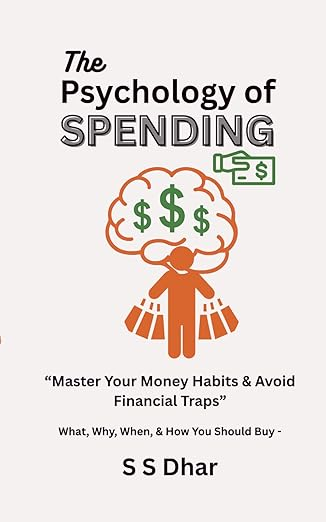
In today’s fast-paced, consumer-driven world, understanding why we spend, how we buy, and what drives our purchasing behavior is more important than ever. Whether you’re struggling with impulse purchases, living paycheck to paycheck, or simply want to better understand your money habits, this book provides the tools you need to transform your financial life.
Through insightful analysis and practical strategies, The Psychology of Spending helps readers uncover the unconscious influences that drive their spending. From emotional triggers like stress, boredom, or social comparison to the subtle techniques marketers use to manipulate our buying decisions, this book offers a comprehensive look at the psychological factors at play when it comes to money.
You’ll learn how to:
Identify and break free from impulse spending
Resist the lure of instant gratification
Master emotional spending habits
Understand the power of marketing and social influence
Build stronger, healthier financial habits
It will also teach a great lesson on: What, Why, When, & How you should buy.
“The key to financial well-being is not about how much you earn, but how you spend and save.”