

Discover mango nutrition, health benefits, skin advantages, calories, and vitamins in this complete science-backed mango guide. Explained! how to eat mango the right way.
In This Article
Introduction
When you bite into a mango, it tastes like sunshine happiness—sweet, bright, and juicy. But the health benefits of mango aren’t just about how it tastes; every slice has significant scientific benefits. This tutorial will tell you why the “King of Fruits” is also an unsung hero in your health journey if you’ve ever wondered what health benefits mangoes have other their great taste. Find out why mangoes should be at the top of your list of foods to eat and how to eat them for better health.
Complete Nutritional Profile of Mango
Mangoes boast an impressive nutrient spectrum:
| Nutrient | Value (per 100g) | Compared to Other Fruits¹ |
|---|---|---|
| Calories | 60 kcal | Moderately low |
| Carbohydrates | 15 g | Slightly higher |
| Fiber | 1.6 g | Similar to orange |
| Sugars | 14 g | More than apples |
| Protein | 0.8 g | Less than banana |
| Vitamin C | 36 mg (40% DV) | Excellent source |
| Vitamin A | 54 µg (6% DV) | Strong source |
| Vitamin E | 0.9 mg (6% DV) | Similar to kiwi |
| Folate | 43 µg (11% DV) | Above average |
| Potassium | 168 mg (5% DV) | Comparable to orange |
| Antioxidants | High (polyphenols, beta-carotene) | Excellent |
| Natural sugars | Fructose, Sucrose | Well-balanced |
*DV = Daily Value, based on a 2,000-calorie diet
Mango vs Other Fruits Table
| Fruit | Calories | Fiber | Vitamin C | Vitamin A | Potassium | Sugars |
|---|---|---|---|---|---|---|
| Mango | 60 | 1.6g | 36mg | 54µg | 168mg | 14g |
| Orange | 47 | 2.4g | 53.2mg | 225IU | 181mg | 9g |
| Banana | 89 | 2.6g | 8.7mg | 64IU | 358mg | 12g |
| Apple | 52 | 2.4g | 4.6mg | 54IU | 107mg | 10g |
Mango is one of the best sources of vitamins, especially C and folate. It also has a lot of potassium and antioxidants.
Top Health Benefits of Mango (Backed by Science)
Heart Health
Immunity Support
Gut Health
- Soluble fiber in mango helps regulate digestion, supports gut bacteria, and can reduce constipation.
Eye Health
Weight Management
Skin Glow & Hair Growth
Anti-Aging Potential
Mango for Skin, Hair & Natural Beauty


Collagen Production
Acne Prevention
UV Protection
Scalp Nourishment
- Antioxidants support healthier hair follicles and reduce scalp irritation.
Is Mango Good for Diabetes and Weight Loss?
Glycemic Index
Diabetes
- Small portions (about 3/4 cup) can be enjoyed by diabetics, preferably with a source of protein or fat and not right after meals.
- Studies show mango may improve insulin sensitivity when consumed in moderation by those with prediabetes.
Weight Loss
Best Times to Eat
Expert Tip: Pair mango with yogurt or nuts to slow sugar absorption.
How Much Mango Should You Eat Daily?

- Safe adult portion: 1 small-to-medium mango per day (approx. 150-200g flesh or 3/4 cup sliced).
- Children: 2 slices (each approx. palm-sized) is suitable.
- Overeating (more than 2 large mangoes) may:
Sugar Fact: A medium mango contains 30-45g of natural sugar.
Did You Know? Mangoes have more sugar than many fruits—but their fiber moderates blood sugar for most healthy adults.
Best Ways to Eat Mango for Maximum Nutrition
- Fresh Slices: Best for vitamin C retention and natural fiber.
- Smoothies: Blend with Greek yogurt or nuts for a balanced snack.
- Salads: Combine with leafy greens, avocado, or pulses for a nutrient upgrade.
- Frozen Cubes: Great for desserts or hot-weather snacks.
- Dried Mango: Higher sugar and calories—enjoy in small amounts for a nutritious on-the-go snack.
- Juices: Drink in moderation; juicing removes fiber.
Expert Tip: Never mix mango with milk for those with sensitive digestion.
Mango Myths vs Facts
Also Read
10 Healthy Foods for Glowing Skin: Glow Your Skin Within 90 Days
Vitamin B12 Foods: Natural Sources and Benefits
Weight Loss diet plan with high fiber and protein, 10 super foods in a healthy way.
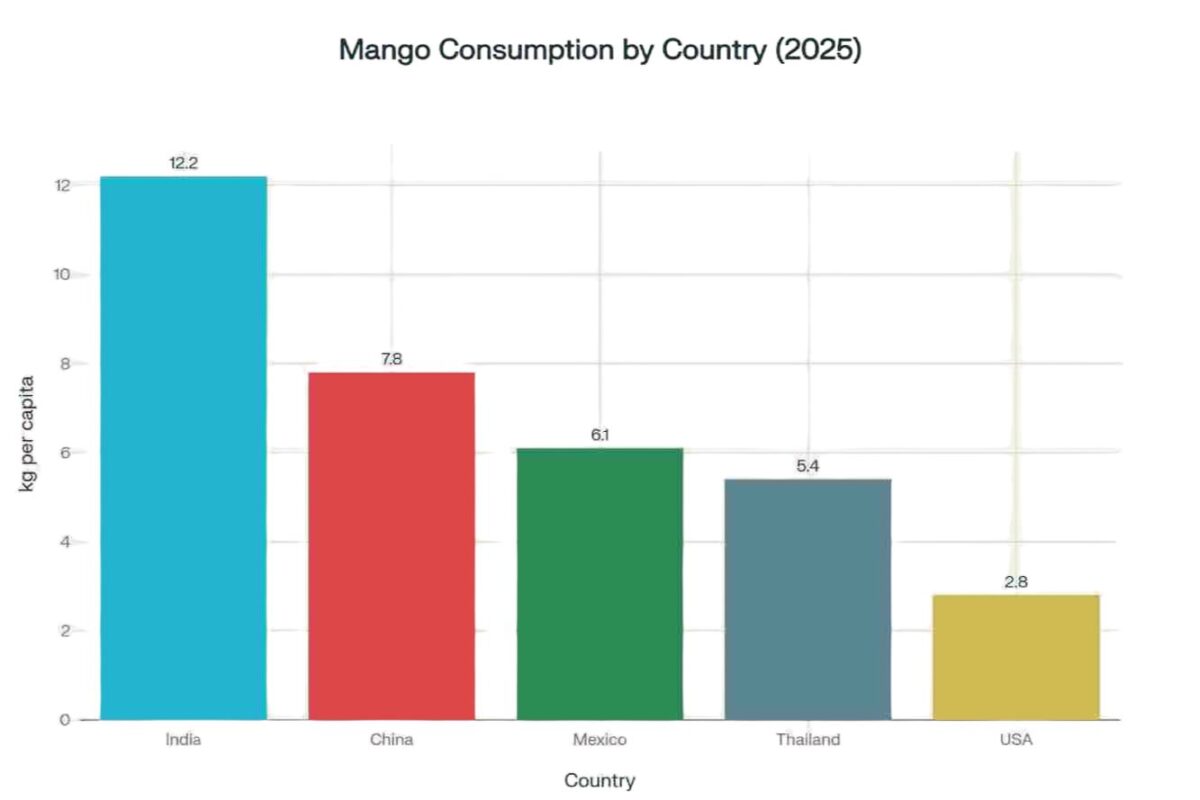
Demographic & Consumption Charts (Data-Based)
Mango Consumption by Country (kg per capita, 2025)
“If you found this article helpful, share it with your circle and follow PingShopping on social media”
Frequently Asked Questions
Is mango good for skin?
Yes! Mango is rich in vitamins C, A, and antioxidants that boost collagen, brighten skin, and fight aging.
Can diabetics eat mango?
Yes, if eaten in moderation and as part of a meal with protein or fiber. Always consult a registered dietitian if unsure.
Is mango fattening?
No, when consumed in proper amounts. Mango is naturally fat-free; overeating can lead to excess sugar intake.
Best time to eat mango?
Mid-morning or afternoon—as a snack, not immediately after heavy meals.
Is mango good for children?
Yes, in age-adjusted portions. Mango provides vitamin A and C to support immune and growth needs.
About the author