
Discover natural insomnia remedies including magnesium, melatonin, and valerian root. Learn science-backed home remedies for insomnia to sleep better naturally.
If you’ve spent countless nights staring at the ceiling, desperate for sleep that won’t come, you’re part of a growing epidemic. According to recent research, approximately 22% of the general population experiences insomnia symptoms, with women significantly more affected than men, experiencing insomnia at rates nearly 1.6 times higher. Yet before you resign yourself to prescription sleep medications with their potential side effects and dependency concerns, research-backed evidence shows that effective natural insomnia remedies exist. From targeted supplements to behavioral changes, discovering how to cure insomnia naturally through home remedies for insomnia and other evidence-based approaches can restore your nights and transform your overall health.
In This Article
Understanding the Insomnia Crisis
Insomnia represents far more than occasional sleeplessness. The condition affects people across all demographics, though certain populations experience higher prevalence rates. According to prevalence studies, approximately 30% of adults report insomnia symptoms, while 15-20% consistently experience the condition, and fewer than 10% meet full diagnostic criteria for chronic insomnia disorder.
Demographic Breakdown of Insomnia Prevalence:
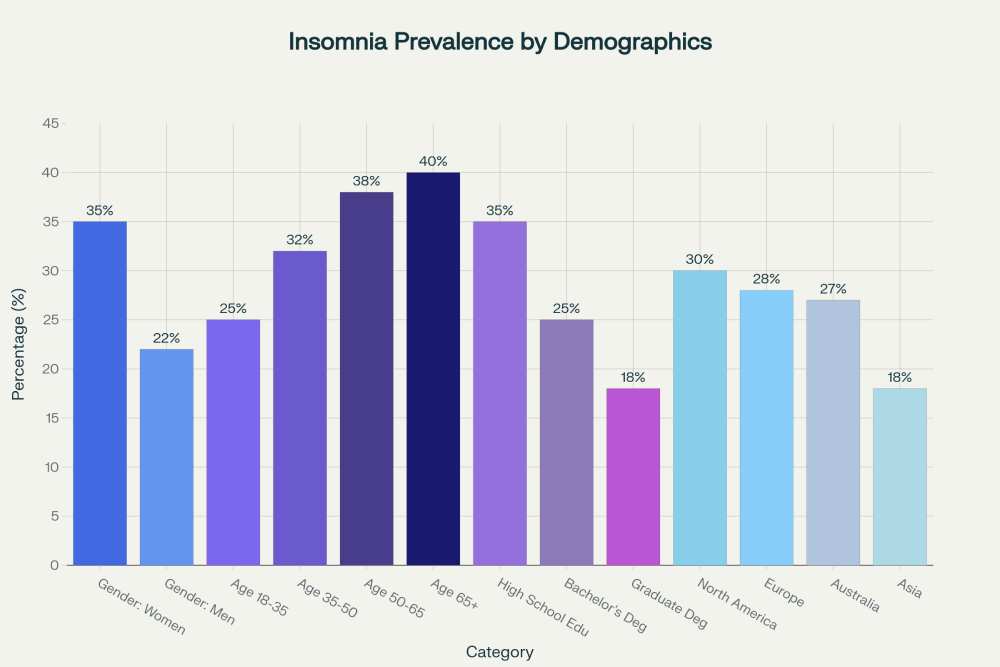
Current data reveal important patterns in insomnia distribution. Women face notably higher rates, with studies indicating females are approximately 35% more likely to experience insomnia than males across age groups. Age plays a significant role, with adults over 35 experiencing higher prevalence rates than younger populations. Interestingly, education levels show an inverse relationship with insomnia—those with higher educational attainment report better sleep quality and lower insomnia prevalence. By region, significant variations exist, with developed nations in North America, Europe, and Australia reporting higher prevalence rates compared to developing regions, likely reflecting lifestyle and stress factors associated with modern living.
Natural Remedies for Sleep: Science-Backed Solutions
The most effective approach to finding insomnia relief tips combines multiple evidence-based natural remedies tailored to your specific sleep challenges.
Magnesium: The Mineral That Unlocks Sleep
Magnesium functions as a crucial cofactor for sleep regulation, activating your parasympathetic nervous system—the biological system responsible for rest and relaxation. This mineral helps produce melatonin, the hormone controlling your sleep-wake cycle, and increases GABA availability, a neurotransmitter that calms neural activity.
Research demonstrates impressive results: participants taking 500 milligrams of magnesium daily for two months experienced significantly fewer insomnia symptoms and measurable improvements in sleep patterns. Magnesium glycinate, which combines magnesium with the amino acid glycine (itself a sleep promoter), represents the optimal form for bedtime supplementation because it avoids digestive upset while maximizing relaxation benefits.
Practical implementation: Consume magnesium-rich foods like spinach, almonds, pumpkin seeds, or dark chocolate 1-2 hours before bed, or supplement with 200-400 mg of magnesium glycinate approximately one hour before sleep.
Important:
If you want to master typing, Quantum Typing can increase your productivity in this AI era.
Melatonin: Harnessing Your Natural Sleep Hormone
Melatonin, produced by your pineal gland in response to darkness, regulates circadian rhythm—your body’s internal 24-hour clock. As a supplement, melatonin helps reset disrupted sleep schedules and accelerates sleep onset, with research showing 88% of adults report improved ability to fall asleep faster when using melatonin supplements.
This remedy works particularly well for shift workers, jet-lag sufferers, and people whose sleep schedules have become dysregulated. The key principle: start with the lowest effective dose (0.5-1 mg) and increase only if necessary, as higher doses may produce paradoxical effects or vivid dreams.
Valerian Root: An Ancient Sleep Ally
Used for thousands of years in traditional medicine, valerian root increases GABA availability in the brain—the same mechanism by which many pharmaceutical sleep aids function. Unlike melatonin’s immediate effects, valerian root requires consistent use over 1-3 weeks to produce noticeable benefits, making it ideal for long-term sleep improvement rather than acute insomnia relief.
Most clinical trials suggest that 300-600 mg taken 30-60 minutes before bed produces optimal results. A combination product featuring valerian root blended with complementary herbs like passionflower and hops enhances effectiveness through synergistic effects.
Related Articles You May Love
Lavender: The Calming Botanical
Lavender’s effectiveness for improving sleep quality now has substantial research support. Studies show that lavender oil capsules (20-80 mg daily) significantly improve sleep patterns while reducing anxiety, with benefits comparable to certain pharmaceutical interventions. Some research indicates that simply smelling lavender enhances relaxation—suggesting both oral and aromatherapy applications offer value.


Passionflower and Chamomile: Gentle Sleep Supporters
These traditional herbal remedies contain compounds that bind to brain receptors responsible for promoting relaxation. Chamomile’s naturally sweet flavor makes it accessible for those who dislike typical herbal tea tastes, while passionflower specifically addresses sleep difficulties accompanied by anxiety and racing thoughts. Both are safe for daily use and work synergistically when combined in herbal tea blends.
Best Treatment for Chronic Insomnia: Lifestyle and Behavioral Interventions
While supplements and herbal remedies provide valuable support, behavioral changes form the foundation of sustainable sleep improvement.
Establish Rigid Sleep Consistency
Your body’s internal clock craves consistency. Going to bed and waking at identical times daily—even weekends—synchronizes your circadian rhythm and naturally promotes sleep onset. This single behavioral change often produces noticeable improvements within 2-3 weeks.
Optimize Your Sleep Environment
Environmental factors dramatically impact sleep quality. A dark, cool (65-68°F / 18-20°C), quiet bedroom equipped with a comfortable mattress and supportive pillow creates ideal sleeping conditions. Blackout curtains, white noise machines, and high-quality bedding represent valuable investments in your sleep health. A white noise machine complements all home remedies for insomnia by addressing environmental factors that often prevent sleep despite using supplements or behavioral interventions.

Practice Relaxation Techniques
Mindfulness meditation and progressive muscle relaxation address the racing thoughts and physical tension that maintain insomnia. Research shows meditation practitioners experience significantly improved sleep onset and duration. Even 15 minutes of daily practice produces measurable benefits. Progressive muscle relaxation—systematically tensing and releasing muscle groups—provides immediate calm and teaches your body what deep relaxation feels like.
Apply Stimulus Control
Use your bed exclusively for sleep and intimate relationships. If you cannot fall asleep within 15-20 minutes, rise and engage in a calm activity until drowsiness returns. This counterintuitive strategy strengthens your brain’s sleep association with the bed, ultimately improving sleep efficiency dramatically.
Optimize Nutrition and Exercise
Recent research from leading universities found that consuming the recommended five servings of fruits and vegetables daily improved sleep quality by approximately 16% compared to consuming none. Regular physical activity (150+ minutes weekly) dramatically enhances sleep quality, but timing matters—exercise completed more than 3 hours before bedtime prevents stimulation-related sleep interference.
Conversely, avoid caffeine after 2 PM, heavy meals within 3 hours of bed, alcohol in evening hours, and excessive evening fluids.
Ready to explore more wellness solutions? Visit PingShopping’s extensive collection of health and wellness articles for additional evidence-based strategies supporting quality sleep, stress reduction, and overall vitality. Subscribe to our wellness newsletter for the latest research-backed health insights delivered directly to your inbox.
Frequently Asked Questions
What Is the Fastest Natural Way to Cure Insomnia Naturally?
While individual responses vary, melatonin and magnesium typically produce effects within 30-60 minutes of consumption. For sustained relief, combining behavioral interventions with herbal remedies produces superior results compared to supplements alone. Most people notice meaningful improvements within 2-4 weeks when implementing multiple approaches consistently.
How Long Do Natural Insomnia Remedies Take to Work?
Onset timing varies considerably by remedy type. Melatonin and magnesium may help within days. Valerian root and herbal blends typically require 1-3 weeks of consistent use. Behavioral modifications, including sleep schedule consistency and environmental optimization, usually show benefits within 2-4 weeks. Some people experience improvement within 3-5 days; others require 4-6 weeks of patience and consistency.
Are Natural Insomnia Remedies Safe for Long-Term Use?
Yes—most natural remedies have excellent safety profiles for extended use. Melatonin, magnesium, valerian root, lavender, and chamomile show no dependence potential and minimal side effects in research spanning decades. Always discuss new supplements with your healthcare provider, particularly if taking medications, to prevent unforeseen interactions.
Can I Combine Multiple Natural Sleep Remedies?
Absolutely. Combining complementary remedies often enhances effectiveness. For example, magnesium plus L-theanine creates synergistic relaxation effects, while melatonin pairs well with valerian root. However, avoid exceeding recommended doses and consult your healthcare provider before starting supplement combinations, particularly with existing medications.
When Should I Seek Professional Help for Insomnia?
If natural remedies and behavioral modifications haven’t produced meaningful improvement after 4-6 weeks of consistent practice, consult a sleep specialist. Persistent insomnia may indicate underlying conditions like sleep apnea, restless leg syndrome, or medical issues requiring professional diagnosis and treatment. Many insurance plans now cover Cognitive Behavioral Therapy for Insomnia (CBT-I), the gold-standard treatment combining behavioral and cognitive interventions.
Your Natural Path to Restorative Sleep Starts Today
Understanding how to cure insomnia naturally through proven home remedies for insomnia represents a powerful shift toward reclaiming your health. Whether you begin with magnesium supplementation, herbal tea rituals, behavioral modifications, or a comprehensive combination approach, consistency and patience yield results.
“If you found this article helpful, share it with your circle and Follow PingShopping on social media”