
Okay, let’s talk about the vitamin that haunted me for years. Vitamin B12.
It’s the nutrient that made me scroll through health forums at 2 a.m., side-eyeing my breakfast, wondering if I was slowly becoming deficient without knowing it.
Maybe you’ve been there too. You hear things like, “Oh, you can get B12 from seaweed,” or “Just eat more nutritional yeast!” And then someone else says, “Actually, that’s not true…” Cue the spiral.
So after years of confusion—and one slightly alarming blood test result—I decided to figure this out once and for all.
Turns out, the whole story starts in the dirt. Literally.
Here’s the weird part no one tells you at first
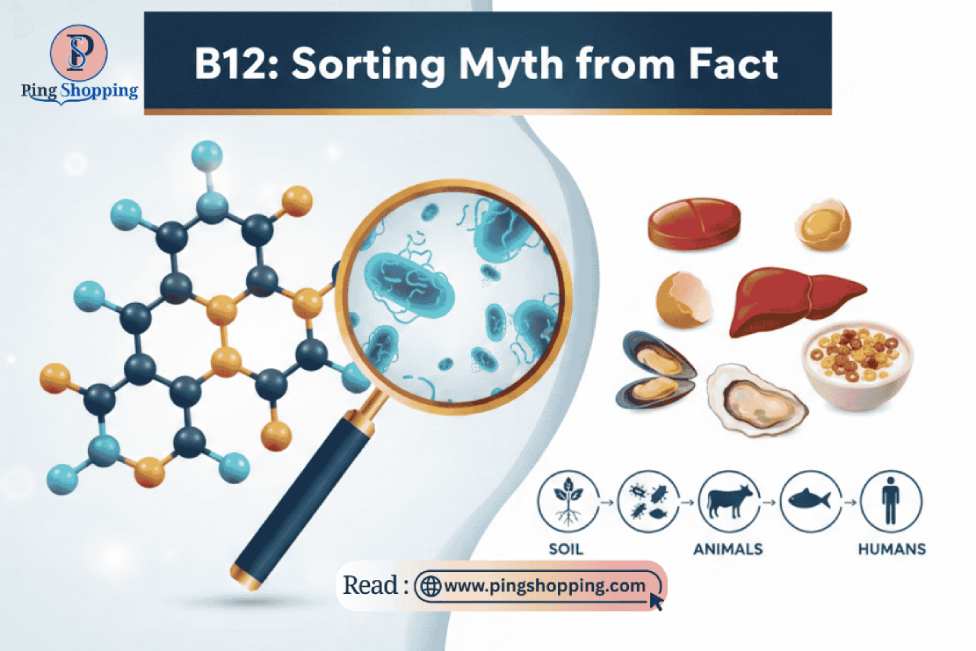
Vitamin B12 isn’t really made by animals. It’s not made by plants either. It’s made by tiny microorganisms—bacteria—hanging out in soil and water.
Animals like cows and sheep get it when they graze on grass (with a little soil residue) or drink from natural streams. They store it in their bodies. So when we eat animal products, we’re basically getting B12 secondhand.
In the old days, humans probably got traces of B12 from unwashed root veggies and untreated water too. But let’s be real—I’m not going to start drinking pond water or skipping the veggie wash. So in our clean, modern world, that path is pretty much closed.
That leaves us with two clear routes.
Route 1: You eat animal products
If you do, you’re already on the B12 highway. But some exits are better than others:
- Liver is the undisputed champion. I know, I know—it’s not exactly a crowd-pleaser. But nutritionally? It’s like a B12 energy drink in solid form. My grandma used to say “liver is good for your blood,” and turns out, she was onto something.
- Shellfish are stealth superheroes. Clams, mussels, oysters—they’re absolutely loaded. I don’t eat them often, but when I do, I imagine my B12 levels doing a happy dance.
- Fish like salmon and trout are solid, everyday options. They give you B12 plus those good omega-3s.
- Eggs, milk, yogurt, and cheese have smaller amounts, but they add up if you eat them regularly.
Honestly, if you’re a meat-eater who enjoys variety, you’re probably covered.
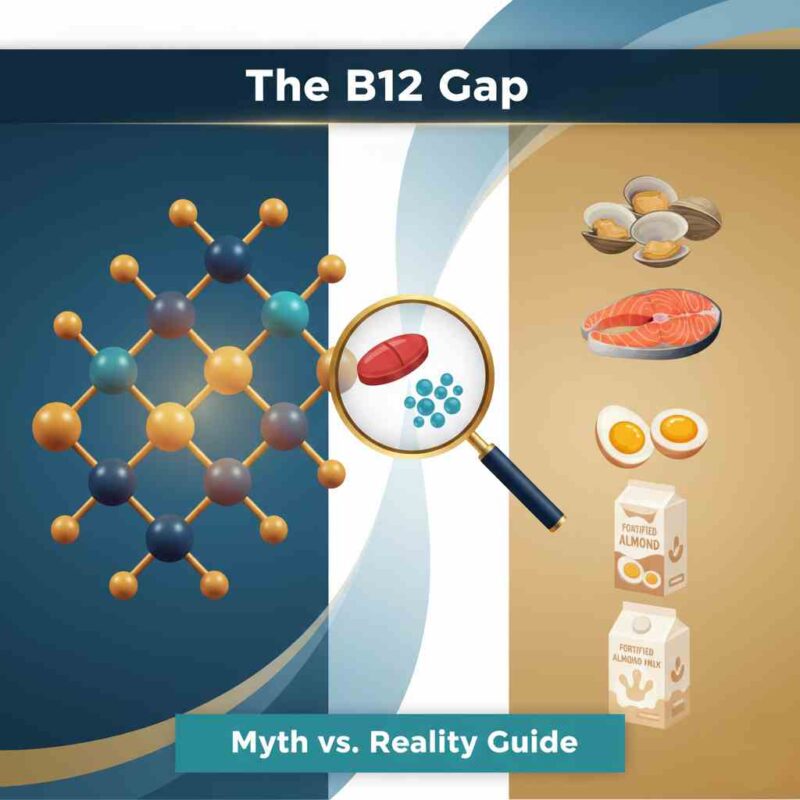
Route 2: You’re plant-based (or mostly)
This is where things get… tricky.
I spent a good chunk of my early vegetarian years believing in “natural” plant sources. I bought spirulina powder, snacked on nori sheets, and put nutritional yeast on everything. Then I learned the hard truth:
- Spirulina and most seaweeds contain something called “B12 analogues.” Fancy term for imposter molecules. They look like B12 to a lab test, but your body can’t use them—and they might even block the real thing.
- Nutritional yeast? Only if it’s fortified (and most in the U.S. is—check the label!). The yeast itself doesn’t make B12; it’s added later. It’s still awesome, though. I put it on popcorn like it’s my job.
- Unwashed organic veggies from super healthy soil? Technically, maybe. But relying on dirt for a crucial nutrient feels… risky. And kind of gross.
So what’s a plant-based human to do?
My “aha” moment: There’s no shame in the modern workaround
Here’s what shifted for me: I stopped thinking of fortified foods and supplements as “unnatural” or a failure.
Instead, I started seeing them as brilliant human solutions to a modern problem.
We figured out how to grow the same B12-producing bacteria in labs, and then add it to foods or pills. It’s the same vitamin—just without the middle-cow.
My personal game plan now:
- I lean on fortified foods daily: My morning oatmeal gets almond milk fortified with B12. I sprinkle fortified nutritional yeast on soups and pasta. It’s easy and delicious.
- I take a supplement. Period. After my “almost low” blood test, my doctor said: “Just take a supplement. It’s simple.” So I do. A tiny sublingual tablet a few times a week. It costs pennies and gives me total peace of mind.
.
The takeaway I wish I’d had years ago
Don’t overthink it like I did.
If you eat animal products regularly, you’re likely fine—though it never hurts to get your levels checked at your next physical.
If you’re vegan or vegetarian, make fortified foods your friend and consider a supplement your nutritional seatbelt. It’s not cheating. It’s being smart.
B12 isn’t just another vitamin—it’s essential for your nerves, your blood, your energy. You can’t “feel” a deficiency until it’s a problem, and by then, it’s harder to fix.
So let’s ditch the guilt and the 2 a.m. Google sessions. Get informed, get a blood test if you can, and then make your plan. Vitamin B12 in Plant Foods
Keep Reading:
- The Vitamin B12 Dilemma: How to Get Enough, Naturally
- The Truth About Vitamin B12: Top Natural Sources You Need to Know
- The Sneaky Truth About Vitamin B12 (And Where to Actually Find It)
- The B12 Gap: My Hunt for the World’s Trickiest Vitamin (and How to Actually Get It)
- Harmful Health Effects of Cigarette Smoking: Risks, Diseases, and Long-Term Impacts
“If you found this article helpful, share it with your circle and follow PingShopping on social media”