
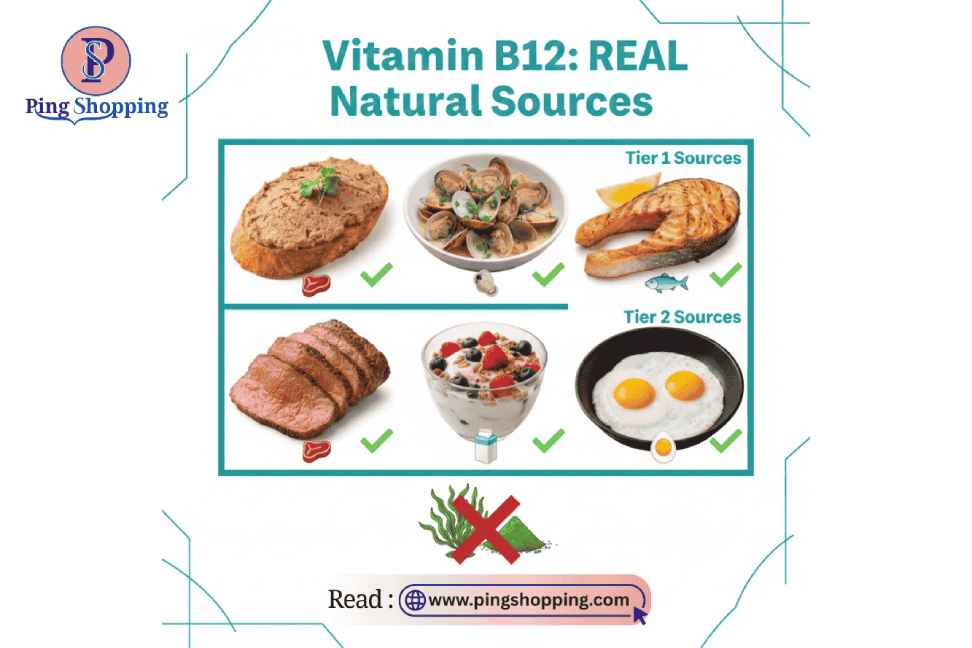
Let’s talk about Vitamin B12. It’s the nutrient that’s always in the spotlight, especially if you’re exploring plant-based diets or just trying to eat a little cleaner. We hear we need it for energy, for our nerves, and to keep our blood healthy. But there’s a persistent myth floating around: that it’s impossible to get enough B12 from natural sources.
So, what’s the truth? Where does B12 actually come from, and how can we get it in a way that feels good for our bodies?
First, the crucial bit of science: Vitamin B12 is made by microorganisms, specifically bacteria. It is not produced by plants or animals themselves. Animals get it by consuming soil-borne bacteria or, in the case of ruminants like cows, from the bacteria in their own gut. This is the key to understanding all natural B12 sources.
Top Natural (But Mostly Animal-Based) Sources
If you include animal products in your diet, these are the most potent and reliable natural sources:
1. Liver & Kidneys (Especially Lamb and Beef): Think of these as nature’s ultimate multivitamin. Organ meats are far and away the most concentrated source of B12. A small serving can provide several times your daily needs.
2. Shellfish: Clams, oysters, and mussels are superstars. Just 3 ounces of cooked clams can deliver over 1,400% of your Daily Value (DV). Mussels and oysters are also exceptionally high.
3. Fish: Sardines, tuna, trout, and salmon are not only great for omega-3s but are also packed with highly absorbable B12. A can of sardines is a convenient, powerhouse lunch.
4. Red Meat (Beef, Lamb): A lean steak provides a substantial dose of B12, along with other vital nutrients like iron and zinc.
5. Dairy Products: Milk, yogurt, and cheese offer a gentler, daily-dose option. For example, a cup of plain yogurt can provide about 30% of your DV.
6. Eggs: The B12 is concentrated in the yolk. While not the most potent source, they are a valuable contributor, especially for vegetarians.
The Elephant in the Room: What About Plant-Based Natural Sources?
Here’s where it gets tricky. There are no scientifically-recognized, reliable plant-based sources of active Vitamin B12.
- Fermented Foods (Tempeh, Miso): While once hoped to be sources, they are not dependable. The type of B12 produced can often be an inactive analogue that doesn’t work in our bodies and can even interfere with real B12 absorption.
- Algae (Spirulina, Nori): Similar story. Spirulina is often touted, but it primarily contains that inactive pseudo-B12. Nori seaweed (the kind used in sushi) shows more promise, with some studies finding active B12, but the amounts can vary wildly depending on how and where it was grown. It’s not yet considered a reliable sole source.
- Mushrooms: Some wild mushrooms that grow in soil rich with certain bacteria may contain trace amounts, but you cannot count on them for your needs.
.
The takeaway: If you follow a strict vegan or largely plant-based diet, the consensus from nutrition scientists and dietitians is clear: fortified foods and supplements are not just an option—they are an essential part of a healthy diet.
Smart, “Natural-Feeling” Strategies for Everyone
Whether you’re omnivore, vegetarian, or vegan, the goal is to feel vibrant and well-nourished.
For Vegans & Vegetarians:
- Embrace Fortification: Think of fortified nutritional yeast, plant milks, breakfast cereals, and meat alternatives as your modern-day “natural” sources. They are fortified with the exact bioactive B12 we need. Nutritional yeast, with its cheesy, nutty flavor, is a particular kitchen hero.
- Supplement Wisely: A daily supplement or weekly high-dose sublingual (under-the-tongue) spray/tablet is a simple, safe, and effective insurance policy. It’s a direct line to what your body needs.
For Omnivores:
- Prioritize the Potent: Include B12-rich foods like clams, sardines, or liver a few times a month. Regularly incorporate fish, dairy, and eggs.
- Listen to Your Body: As we age, our ability to absorb B12 from food decreases. Regular check-ups and being mindful of energy levels are key. Some may still benefit from a supplement, especially after age 50.
The Bottom Line
“Natural” B12 comes from the microbial world and is most efficiently found in animal products that have concentrated it. For vegans, the most responsible and health-supportive approach is to harness modern food technology through fortified foods and supplements. Vitamin B12 in Plant Foods
Getting enough B12 isn’t about ideology—it’s about physiology. It’s the one vitamin where we truly need to be pragmatic to support our long-term nerve health, energy, and well-being. So, know your sources, plan your plate (or supplement regimen) wisely, and give your body the consistent, usable B12 it deserves.
Keep Reading:
- The Vitamin B12 Dilemma: How to Get Enough, Naturally
- The Truth About Vitamin B12: Top Natural Sources You Need to Know
- The Sneaky Truth About Vitamin B12 (And Where to Actually Find It)
- The B12 Gap: My Hunt for the World’s Trickiest Vitamin (and How to Actually Get It)
- Harmful Health Effects of Cigarette Smoking: Risks, Diseases, and Long-Term Impacts
“If you found this article helpful, share it with your circle and follow PingShopping on social media”